
Ever have one of those moments where you’re sitting in your car, hitting the opener, and your garage door decides today is the day it wants to sing the song of its people? A chorus of grinding, squealing, and shuddering that makes you think, “Well, that’s not right.” We’ve all been there. Let’s talk about the unsung hero of our homes—the garage door. It’s more than just a big slab that goes up and down; it’s a complex system, and when it’s happy, we’re happy. When it’s not, it becomes our entire personality until we fix it. So, grab a coffee, and let’s walk through everything you need to know about keeping this giant moving part of your house in tip-top shape.
Getting to Know Your Garage Door’s Moving Parts
Think of your garage door as a team of athletes. Every player has to perform perfectly for the win—that smooth, quiet, and safe operation we take for granted.
The Heavy Lifters: Springs and Cables
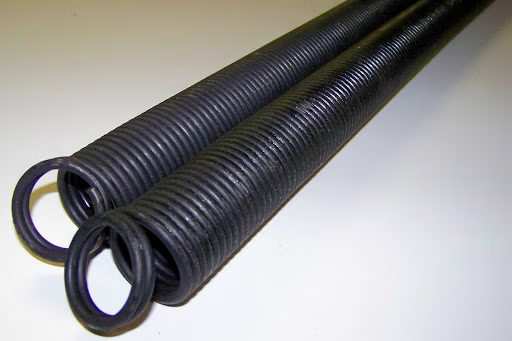
This is the big one. Those giant springs above your door? They’re doing almost all the heavy lifting. Counterbalance springs, whether they’re the long torsion springs mounted above the door or the pair of extension springs on the sides, hold an immense amount of tension. We’re talking “serious-injury-if-they-break” levels of tension. The cables work with them, acting as the tendons that guide the force. When a spring snaps, it’s not just an inconvenience; it’s a full stop. Your door becomes a 200+ pound dead weight. This is the number one reason we get urgent calls at Best Garage Door in New Jersey. It’s also the number one repair we beg folks not to DIY. Trust us, some things are worth calling the pros for.
The Guiding Force: Tracks and Rollers
If the springs are the muscle, the tracks and rollers are the nervous system. The tracks need to be perfectly aligned—we’re talking laser-level precise. Even a slight bump or dent can throw the whole operation off, causing binds, jumps, and that awful grinding noise. Rollers can be nylon or steel, and over time they wear down, get chipped, or just dry out. Ever heard a sound like a dinosaur in distress when your door moves? Dry, worn rollers are usually the culprits. A bit of maintenance here goes a long, long way.
The Brains and Brawn: Opener, Sensors, and Safety
Your opener is the quarterback. But even the best quarterback needs to read the defense. That’s where the sensors come in. Those little eyes at the bottom of your door tracks are non-negotiable for safety. If they’re misaligned by a millimeter, your door will stubbornly refuse to close. It’s frustrating, sure, but it’s also a brilliant fail-safe. We see so many service calls in Edison and Woodbridge where a simple sensor realignment (maybe a kid kicked a ball into it) solves the problem in two minutes. We never mind those calls—honestly, we love an easy fix!
When to Repair, When to Replace, and When to Panic (Spoiler: Never Panic)
This is the million-dollar question, isn’t it? How do we know if we’re looking at a simple repair or a full installation project? Let’s break it down.
Signs You Might Just Need a Repair:
- The Door is Uneven or Crooked: This often points to a spring issue or a track alignment problem. It’s usually very repairable.
- It’s Noisy: Grinding, squeaking, screeching—this is typically rollers, hinges, or the opener chain needing lubrication or replacement.
- The Door Reverses Before Hitting the Floor: This is almost always a sensor alignment or sensitivity issue. An easy fix!
- It Opens a Few Inches, Then Stops: This could be a limit switch adjustment on the opener. Another quick service call.
Signs You’re Probably in Replacement Territory:
- Major Physical Damage: A big dent from an, ahem, parking mishap? If the section is severely bent, it compromises the door’s integrity.
- Outdated Technology & Safety: Does your opener have a cute little light bulb that comes on? That’s a relic. Modern openers have rolling code technology and mandatory safety sensors. Upgrading is a smart safety move.
- Persistent Problems on an Old Door: If you’re constantly fixing springs, track issues, and panels on a door that’s 20+ years old, you’re throwing good money after bad. A new, efficient door can be more cost-effective in the long run.
Wondering about the price? It’s not a one-size-fits-all answer, but this table should give you a realistic ballpark for common scenarios in our area.
| Service Type | Typical Scope of Work | Average Cost Range (Factors Include Door Size, Material) | Is it a DIY Job? |
|---|---|---|---|
| Spring Replacement | Replacing broken torsion or extension springs. | $200 – $400+ | Absolutely not. High-tension danger. |
| Sensor Realignment | Adjusting safety eyes for proper alignment/cleaning. | $75 – $150 (often part of a service call) | Maybe, if you’re handy. |
| Track Realignment | Straightening and securing bent or loose tracks. | $150 – $300 | Not recommended. Precision is key. |
| Full Door Installation | Removing old door, installing new door & opener. | $1,200 – $4,000+ | No. Requires specialized tools and knowledge. |
| Roller Replacement | Swapping out old rollers for new nylon/steel ones. | $150 – $250 | Possible, but can be tricky without the right know-how. |
Why Your Local, Nearby Pro is Your Best Bet
Okay, let’s get real for a second. We’ve all searched “garage door repair near me” in a moment of desperation. The internet will throw a dozen companies at you. So why does going local with a company like ours, Best Garage Door, make such a difference for folks in New Jersey?
First off, speed. When a spring breaks in Clark at 5 PM, you don’t want a company routing a truck from two counties away. Being based right here in central NJ means we can often be the nearest and fastest help. We live in these towns too—Franklin Township, Rahway, the surrounding areas—so we understand the local architecture and common issues.
Then there’s the relationship. We’re not a faceless national call center. When you call us, you talk to our team directly. We can look up your history, remember your door, and give you honest advice. Is that weird rattle something urgent, or can it wait until next week? We’ll tell you straight. IMO, that peace of mind is worth its weight in gold.
And about that cost conversation… a trustworthy local garage door company won’t play pricing games. We give clear, upfront quotes before any work begins. No hidden fees, no surprise charges later. You’ll know the price before we turn a single wrench. FYI, that’s a good rule of thumb for vetting any service company 🙂
Let’s Answer Those Burning Questions You’re Too Busy to Google
1. “My garage door just won’t close all the way. It goes down and then pops right back up. What gives?”
This is the classic sensor problem! Your safety reversal sensors (those little eyes near the floor) are misaligned or blocked. Something as simple as a cobweb, a leaf, or a slight bump to the bracket can break the invisible beam. Check for obstructions first. If they look clear, try gently adjusting the brackets so they are pointing directly at each other. A little LED light on each sensor should glow steady when aligned. If it’s still being stubborn, the sunlight can sometimes interfere, or the wiring might have an issue. That’s when you give us a shout.
2. “How often should I actually perform maintenance on my garage door?”
We recommend a basic check-up twice a year—spring and fall are easy to remember. Your quick checklist should include:
- Visual Inspection: Look for rust, frayed cables, and shiny spots on the track (indicating friction).
- Test the Balance: Disconnect the opener (pull the red cord) and manually lift the door halfway. If it doesn’t stay put, the springs are out of balance.
- Listen and Lubricate: Run the door and listen for squeaks. Apply a silicone-based lubricant (not WD-40!) to hinges, rollers, and the opener chain.
A little maintenance prevents most major repairs.
3. “Is insulating my garage door actually worth it?”
If your garage is attached to your house, or if you use it as a workspace, 100% yes. It’s a game-changer for temperature control and noise reduction. It keeps your garage warmer in winter and cooler in summer, which is great if you have a room above it. It also makes the door itself more rigid and quieter in operation. For the cost, it’s one of the more effective efficiency upgrades you can make to your home.
Wrapping It All Up: Your Door Deserves Some Love
So there you have it. Your garage door is a hardworking piece of machinery that asks for very little but gives you so much—security, convenience, and curb appeal. Paying a little attention to it can save you a major headache (and a major bill) down the road.
Remember, for the big, scary, high-tension stuff, please call a professional. It’s just not worth the risk. And if you’re in our neck of the woods in New Jersey, from Edison to Woodbridge and the closest communities around, that’s where we come in. At Best Garage Door, we’ve built our reputation on being the friendly, fast, and reliable local team you can count on. Whether it’s a strange noise, a door that’s given up entirely, or you’re just thinking about a beautiful new installation, we’re here to help. Give us a call sometime—let’s keep your door moving smoothly.